
FADOKTOR
Vacuum pressure impregnation equipment
Vacuum–pressure impregnation systems
The impregnation system (autoclave, vacuum pressure impregnation equipment – VPIE) introduces wood preservatives into the internal structure of the timber by applying vacuum and pressure.
Compared to soaking tank solutions, this technology ensures deeper and more controlled penetration, especially for timber exposed to high mechanical or environmental loads.
For pressure impregnation, we offer impregnation cylinders in various diameters and lengths, tailored to customer requirements. The steel structures of the cylinders are manufactured from materials selected according to the operating pressure.
for high-pressure salt-based impregnation and non-pressure soaking preservation treatments
for the application of boron- and copper-based wood preservatives in aqueous solutions
impregnation cylinders available in various diameters and lengths
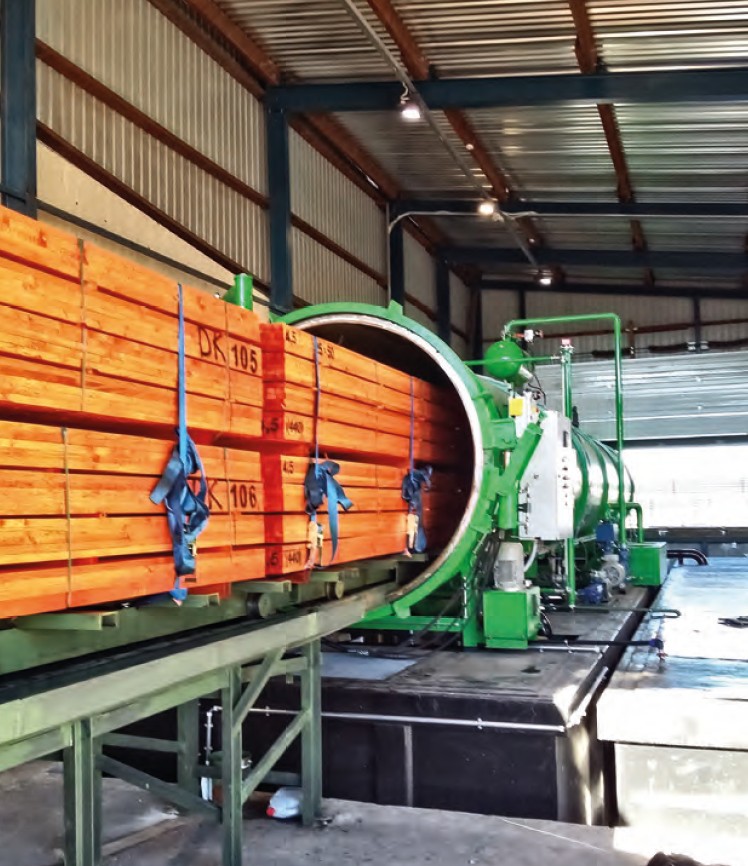
Impregnation system parameters

Diameter
1,8 m
2,3 m

Length
8 m
15 m

Operating temperature
180 °C
130 °C

Operating pressure
8 bar
6 bar
Gallery
How does the impregnation system work?


01
The timber is placed into the autoclave on rail trolleys


A vacuum is created, removing air from the wood’s pores
02

The impregnating solution is filled into the chamber
03

Under pressure, the wood preservative is deeply absorbed into the timber
04

The solution is drained back and the treated wood is removed
05
Main structural components of the autoclave
Locking mechanism
- One of the most important structural units
- Pressure generated inside the operating chamber ensures safe locking
- Closing lid equipped with rings and a hydraulic system, using rubber seals of various cross-sections
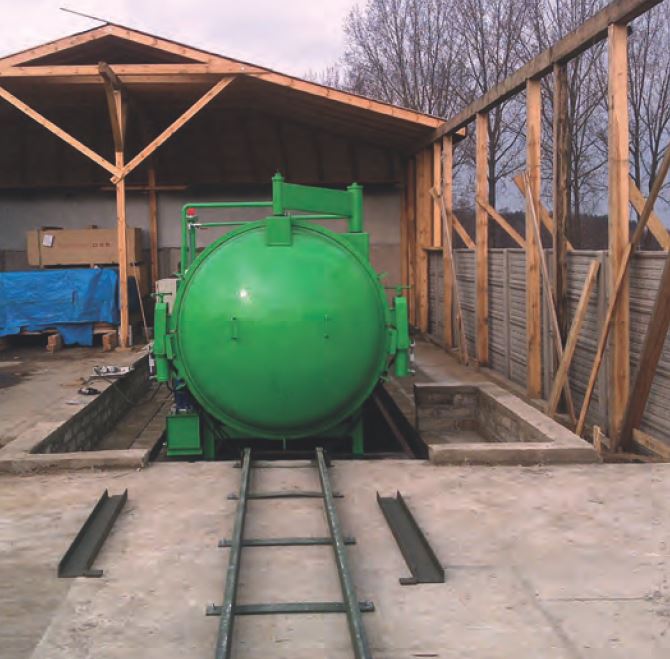
Rails and trolleys
- Movement of timber to be treated on internal rails using rail trolleys
- Special design prevents the trolleys from floating during operation
- Rigid, solid structural steel construction
- Trolley wheels with ball bearings
- External rails connected to the cylinder, designed according to customer requirements
- Movement by simple manual operation or powered drive
Storage tanks
- Used for storing the impregnating solution
- Rectangular, cuboid-shaped steel tanks
- Capacity is typically about 30% larger than that of the autoclave, allowing operation even with smaller timber loads and reducing the need for frequent refilling
- Installation options:
- Below the autoclave (most common):
- Advantage: the autoclave can be drained by gravity, reducing the number of valves and pipelines required for operation
- Disadvantage: the structure must be installed on a concrete foundation
-
Beside or behind the impregnation cylinder:
- Emptying the autoclave requires transfer pumps and additional valves
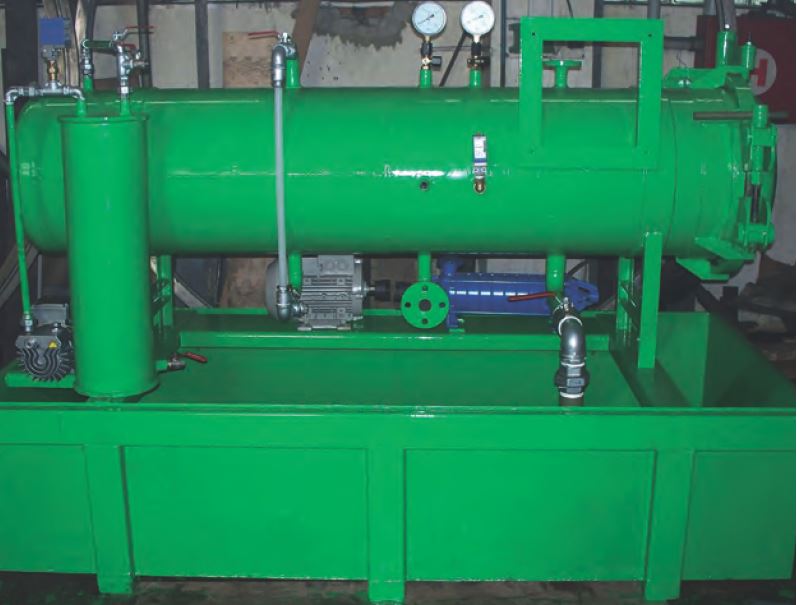
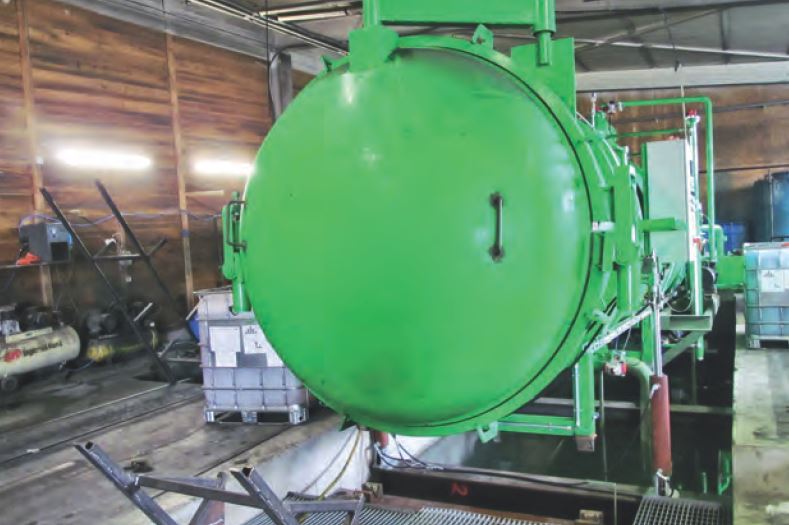
Autoclave operation
Process monitoring:
To supervise the impregnation process, the autoclave is equipped with control instruments:
- visual and digital pressure gauges
- electromagnetic flow meter
Pressure pump
- Used to generate pressure inside the autoclave
- Centrifugal pumps up to 16 bar
Safety
- Each autoclave is equipped with a spring-loaded safety valve
Vacuum pump
- Used to create vacuum (-0.85 bar) inside the autoclave
- Water-ring pumps with performance depending on tank capacity
Valves and piping
- High-quality valves and pipes are used to ensure safe operation
- Valve control: electric or pneumatic
Float switch
- Stops the vacuum pump when the autoclave is filled with impregnating solution
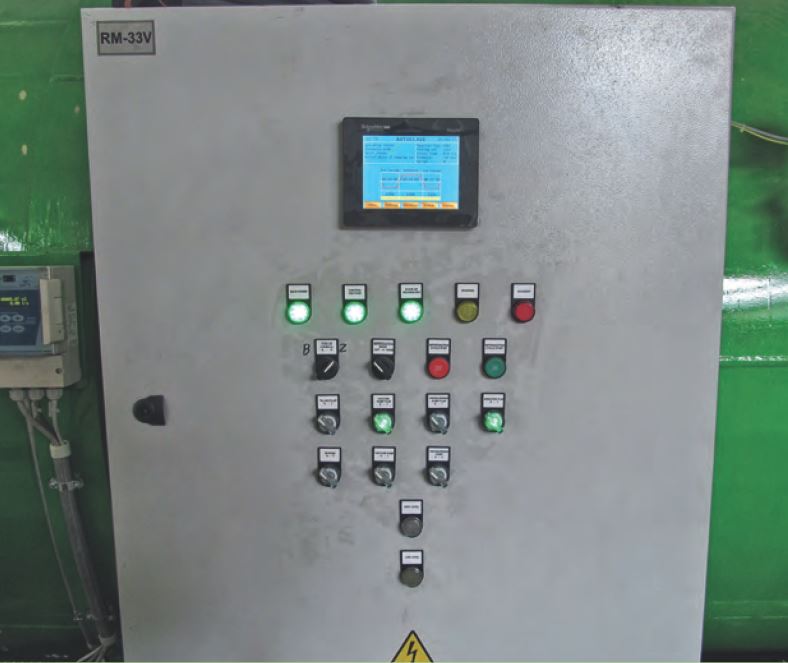
Control system
- Control mode: manual or automatic
- Most of the equipment is fitted with a fully automated PLC-controlled system
- The touch screen allows setting of impregnation parameters
- The system enables data recording (e.g. pressure and flow values) during impregnation, which can later be displayed in logs (Excel format) or as printed reports
- All listed components are installed in the electrical control cabinet together with other necessary elements (relays, switches, etc.)
ABOUT US
Fadoktor Mérnöki Iroda Kft., its predecessor, and the members of the Rebinium Group have been a family-owned business since 2000, engaged in wood protection, the manufacturing and distribution of sawmill and further-processed wood products, general contracting for roof renovations and CLT buildings, as well as the design and construction of playgrounds.
CONTACT
Soproni Innovációs és Technológiai Centrum Inkubátorház
Sopron, Lakatos István út 2.
Located next to the “Sopron-East” junction of the M85 expressway.
For route planning click here!
Mo – Fr: 09:00-17:00
Dr. László Németh, CEO
Bence György Katona, Chief Engineer
E-mail: bence.katona@fadoktor-mi.hu
Tel.: +3630/114-8088
Dávid Major, Leader of Planning
E-mail: david.major@fadoktor-mi.hu
Tel.: +3630/114-8099
Orsolya Szemenyeiné Bőr, Office manager
E-mail: fadoktor@fadoktor-mi.hu
Tel.: +3699/386-838
Dániel Márton, Trainee of Timberindustrie
E-mail: daniel.marton@fadoktor-mi.hu
Tel.: +3699/386-838
Luca Buga-Kovács, Timber Industry Engineer MSc.
E-mail: favedoszer@fadoktor-mi.hu
Tel.: +3699/386-838
WHAT WE OFFER
Playgrounds
Wood protection
Outdoor equipment
Dipping tanks
Vacuum-impregnation equipment
Skateparks
© FADOKTOR MÉRNÖKI IRODA KFT. 2023 | Impressum | Privacy Policy | Website: Webpole